
Keynote Speakers
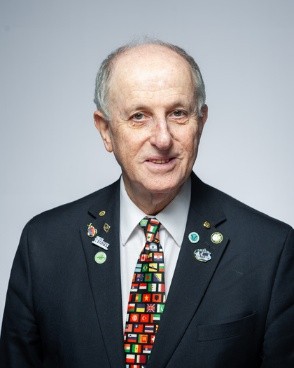
Dr. Luis Kun
Distinguished Professor Emeritus of National Security Affairs, William Perry Center, NDU.
Topic:
The Humanitarian Challenges of a Global Water Crisis and Climate Change From Pollution to Food Security and Public Health
Abstract:
This talk explores the critical intersection of the global water crisis and climate change, focusing on the resulting humanitarian challenges. From the impact of pollution on water quality to the broader consequences for food security and public health, Dr. Kun examines how interdisciplinary leadership and technical innovation can address these existential threats.
Bio:
Dr. Luis Kun is the Immediate Past President (2025-2026) of the IEEE Society on Social Implications of Technology (SSIT) and was recently recognized by the IEEE Computer Society as a Distinguished Contributor for his technical contributions to humanity. He is an IEEE Life Fellow and Fellow of AIMBE, IAMBE, and IUPESM, internationally recognized for leadership in biomedical engineering, healthcare, information technology, and national security.
He is currently a Distinguished Professor Emeritus of National Security Affairs at the William J. Perry Center for Hemispheric Defense Studies at the National Defense University. Within IEEE, he chairs the SSIT Nominations & Appointments Committee and the Distinguished Lecturer Program. He also serves as the Vice-Chair of the Fellows Committee and is a Distinguished Visitor for the IEEE Computer Society. His career spans over four decades of leadership, including service on the ADCOM of the IEEE Engineering in Medicine & Biology Society (EMBS) where he was also a Distinguished Lecturer and is the coordinator for IEEE R2 Life Members Committee. For the IEEE USA he was the founding chair of the High-Performance Computers & Communications (HPCC) and Electronic Health Records (EHR) WG and the Bioterrorism & Homeland Security WG, both under the Medical Technology Policy Committee MTPC). He was the founding chair of the Critical Infrastructure Protection Committee (CIPC).
He is currently a Distinguished Professor Emeritus of National Security Affairs at the William J. Perry Center for Hemispheric Defense Studies at the National Defense University. Within IEEE, he chairs the SSIT Nominations & Appointments Committee and the Distinguished Lecturer Program. He also serves as the Vice-Chair of the Fellows Committee and is a Distinguished Visitor for the IEEE Computer Society. His career spans over four decades of leadership, including service on the ADCOM of the IEEE Engineering in Medicine & Biology Society (EMBS) where he was also a Distinguished Lecturer and is the coordinator for IEEE R2 Life Members Committee. For the IEEE USA he was the founding chair of the High-Performance Computers & Communications (HPCC) and Electronic Health Records (EHR) WG and the Bioterrorism & Homeland Security WG, both under the Medical Technology Policy Committee MTPC). He was the founding chair of the Critical Infrastructure Protection Committee (CIPC).
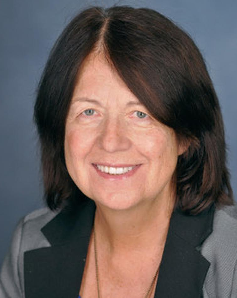
Dr. Bozenna Pasik-Duncan
Professor of Mathematics & IEEE Life Fellow, University of Kansas, USA.
Topic:
Advancing Stochastic Adaptive Control and STEM Education for Global Impact
Abstract:
This session explores the interdisciplinary applications of stochastic adaptive control, data analysis, and modeling in solving complex global problems. Dr. Pasik-Duncan also highlights the critical role of STEM education and outreach in fostering the next generation of researchers, emphasizing inclusivity and global collaboration in technical societies.
Bio:
Bozenna Pasik-Duncan received her Master's degree in Mathematics from the University of Warsaw and Ph.D./D.Sc. degrees from the Warsaw School of Economics. At the University of Kansas (KU), she is Professor of Mathematics, Courtesy Professor of EECS and AE, and a Chancellors Club Teaching Professor. She is a Life Fellow of IEEE, Fellow of IFAC, and Fellow of AWM.
She has held numerous leadership roles, including IEEE CSS Vice President, Chair of the IEEE WIE Committee, and founder of the Women in Control (WIC) committee. Currently, she serves as the VP of Member Services for the IEEE Systems Council (2025-Present) and represents SSIT and CSS across several IEEE TAB committees. Her research primarily focuses on stochastic adaptive control, data modeling, and STEM education. She is a recipient of the IEEE EAB Meritorious Achievement Award and the IEEE Third Millennium Medal.
She has held numerous leadership roles, including IEEE CSS Vice President, Chair of the IEEE WIE Committee, and founder of the Women in Control (WIC) committee. Currently, she serves as the VP of Member Services for the IEEE Systems Council (2025-Present) and represents SSIT and CSS across several IEEE TAB committees. Her research primarily focuses on stochastic adaptive control, data modeling, and STEM education. She is a recipient of the IEEE EAB Meritorious Achievement Award and the IEEE Third Millennium Medal.
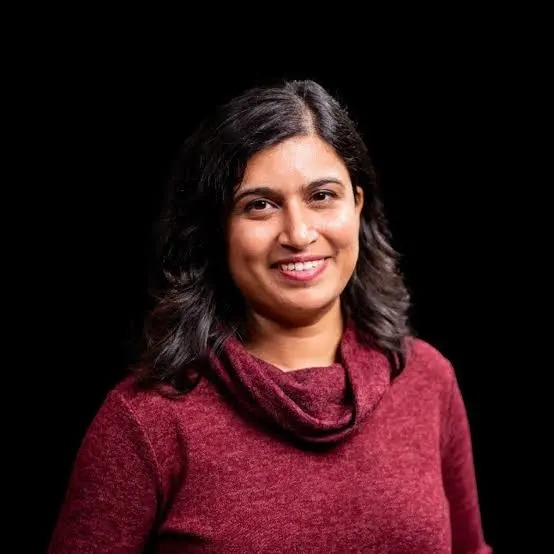
Dr. Kalai Ramea
AI scientist, Climate Innovator and Founder, South Park Commons, San Francisco, USA.
Topic:
Artificial Intelligence and Global Transformation: Who Benefits, Who Bears the Cost
Abstract:Artificial intelligence is rapidly reshaping economies, infrastructure, and societies across the world. However, its impacts are neither uniform nor neutral. This keynote examines how AI-driven automation is transforming work, productivity, and employment, alongside its influence on critical systems such as energy, climate, and development. Who benefits from these transformations? Which communities face the greatest disruption? This talk will go through thoughtful design, policy, and governance that can help ensure that AI-driven global transformation is inclusive, responsible, and sustainable.
Bio: Dr. Kalai Ramea is an accomplished scientist, innovator, and founder at the forefront of artificial intelligence and the applied sciences. With over a decade of experience translating cutting-edge AI research into real-world systems, her work explores how intelligent technologies are reshaping society at scale. She is particularly focused on the impact of AI on climate and energy systems, with an emphasis on advancing equitable, sustainable solutions in the Global South.
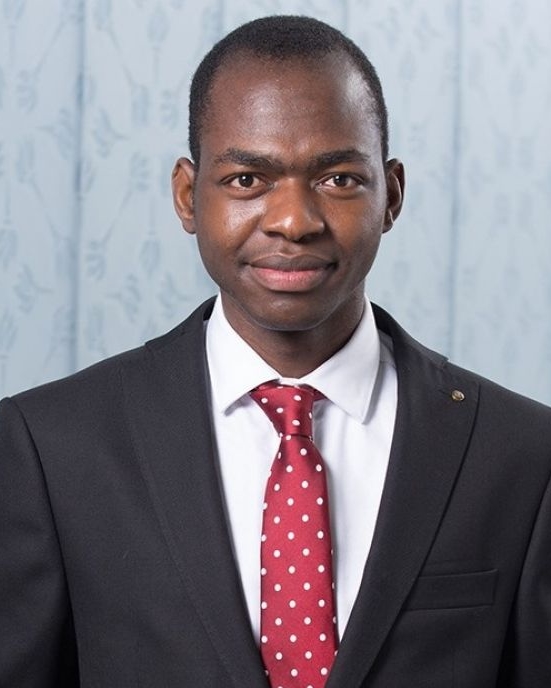
Dr. Hamidou Tembine
Professor of AI, University of Quebec at Trois-Rivieres (UQTR), Canada.
Topic:
Textless Audio & Visual Machine Intelligence
Abstract:
Current machine "intelligence" is built on a silent assumption: intelligence equals text.
Tokenization, orthography, captioning layers, and text-aligned embeddings dominate our architectures.
What is missing are waveform-native reasoning, prosody, tone, rhythm, gesture, silence, context density, and communal signal dynamics.
Billions are audio-literate but not text-dominant. Current systems force speech into transcription bottlenecks, collapse visual meaning into captions, and discard paralinguistic entropy. The result is structural exclusion encoded at the representation layer.
This keynote introduces Textless Audio & Visual Machine Intelligence: signal-first architectures that learn directly from spectral manifolds, visual fields, and distributional community signals without orthographic reduction.
We formalize risk quantification directly in signal space and embed uncertainty into "causal agentic World Models" capable of counterfactual reasoning and decision-making. We further define X-to-X causal communication: waveform-to-vision, vision-to-action, signal-to-signal, bypassing textual intermediaries.
The next frontier is not larger language models.
It is a collective intelligence that hears, sees, models causality, and communicates, without requiring text to exist.
Bio:Hamidou Tembine is co-founder of Timadie and Professor of Machine Intelligence at the School of Engineering, University of Québec (Canada). He received a master's degree in Applied Mathematics from École Polytechnique, Palaiseau (France), a master's degree in game theory and economics, and a Ph.D. in computer science from INRIA and the University of Avignon. He is founding director of the Learning and Game Theory Laboratory and one of the principal investigators of the Center on Stability, Instability, and Turbulence. He has also co-founded Grabal, WETE, and AI Mali, and founded Guinaga, SK1 Sogoloton, and WETE. He is the author of more than 300 publications and several books, including. Distributed Strategic Learning for Engineers (CRC Press), Game Theory and Learning in Wireless Networks (Elsevier),Mean-Field-Type Games I-II and for Engineers, Machine Intelligence in Africa in 20 Questions, and GPT Meets Game Theory. He is a senior member of IEEE, recipient of the IEEE ComSoc Outstanding Young Researcher Award, and winner of more than ten best paper awards, all in game theory. He has been recognized as a Next Einstein Fellow (2017) and Simons Senior Fellow (2020). His current research interests span learning, evolution, and games, with applications in agriculture, food, water, energy, communications, transportation, healthcare, textless audio-to-audio machine intelligence and people-centered cyber-physical systems security.
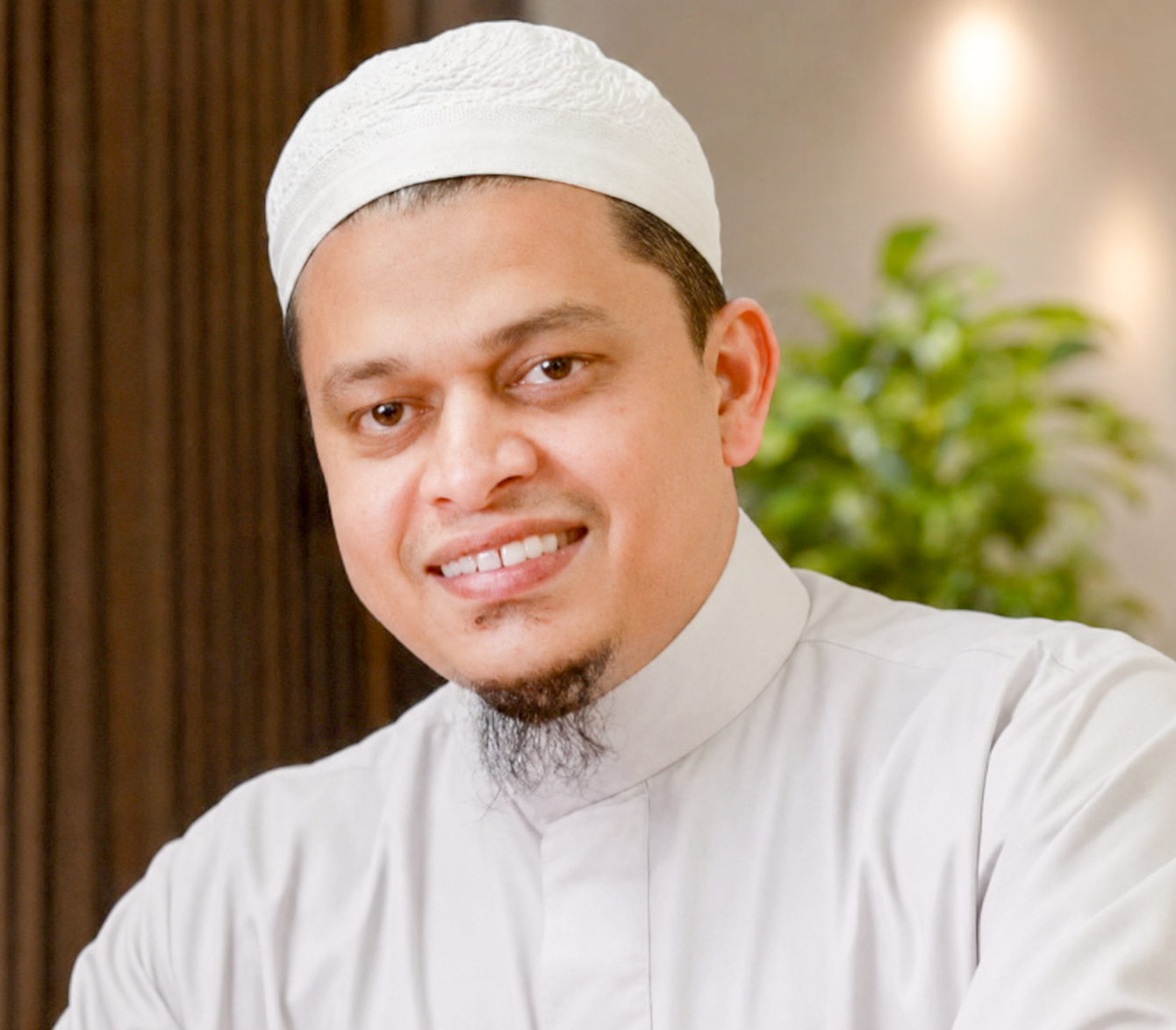
Syed Yasin
Award-Winning XAI Scientist, Inventor, Entrepreneur, India
Topic:
Why AI Without Explainability is a Global Liability
Abstract:As artificial intelligence increasingly drives solutions across healthcare, smart cities, and environmental sustainability, the global development community faces a critical systemic risk: the AI Black Box. While the push for advanced autonomous systems is imperative for social impact, deploying these systems without mathematical transparency transforms a technological asset into a profound liability.
This keynote addresses the urgent necessity of Explainable AI (XAI) as the foundational infrastructure for sustainable development. When high-stakes decisions—from patient triage to resource distribution—are made by opaque models, it strips away human agency and erodes the very trust required to sustain digital ecosystems. We will explore the critical transition from probabilistic, unverified outputs to transparent, "Whitebox" architectures that generate an unalterable "Algorithmic Receipt" for every decision. By operationalizing the DIITA (Dignity, Identity, Inclusion, Trust, and Agency) framework at the code level, this session will outline how researchers, policymakers, and engineers can hardcode verifiable trust into the next generation of neural networks. Ultimately, true global development cannot rely on systems that ask for blind faith; it demands systems that provide visual, mathematical justification.
In simple words: "AI must give a verifiable receipt explaining its decision."
Bio: Syed is an award-winning XAI scientist, educator, and gold medalist (DST-Lockheed Martin) in advanced machine learning algorithms, recognized globally for his pioneering work in algorithmic transparency. His work is towards the DIITA (Dignity, Identity, Inclusion, Trust, and Agency) framework, which champions ethical, human-centric deployment of autonomous systems going forward.
As a leading voice in the transition toward accountable technology, he holds a United States patent for Explainable AI (XAI) architecture, a technology that has been licensed by twenty-three major global technology corporations to ensure claim protection and algorithmic verifiability. Dedicated to bridging the massive capability gap in the IT workforce, he advocates for a "first-principles" and visual approach to AI education. He is the architect of the XAI curriculum, which deconstructs the foundational mathematics of neural networks to train the next generation of engineers in building transparent, "Whitebox" systems. He is a frequent advisor to enterprise executives and a featured speaker at international and university FDP conferences/Programs.
He is passionate about quantum theoretical physics, emerging technologies (XAI), and the operationalization of human trust.